
The Fox Wife by Yangsze Choo: A Review
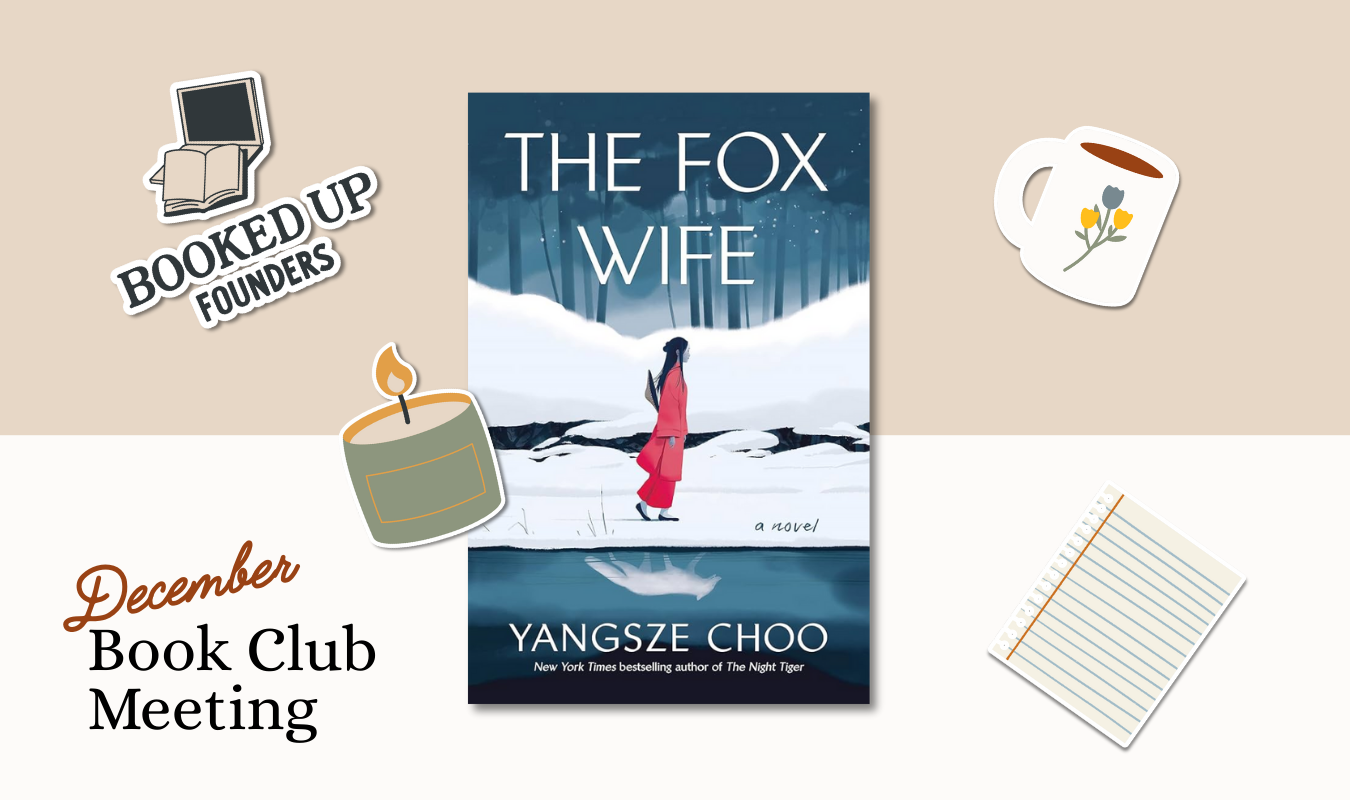
When we chose Historical Fiction Set in the Snow as December's theme, we wanted atmosphere. The Fox Wife by Yangsze Choo delivered—a slow-burn tale of vengeance, lost love, and Chinese folklore set in the winter of 1908 Manchuria.
About the Author
Yangsze Choo is a Malaysian author whose Harvard senior thesis focused on Asian female ghosts (we love this origin story). After publishing The Ghost Bride and The Night Tiger, she released The Fox Wife—which has earned spots on NPR's Favorite Fiction list and the New York Times Best Books. Choo narrates the audiobook herself, which several members appreciated for the authentic pronunciation of Chinese names and places.
Our Book Club’s Rating
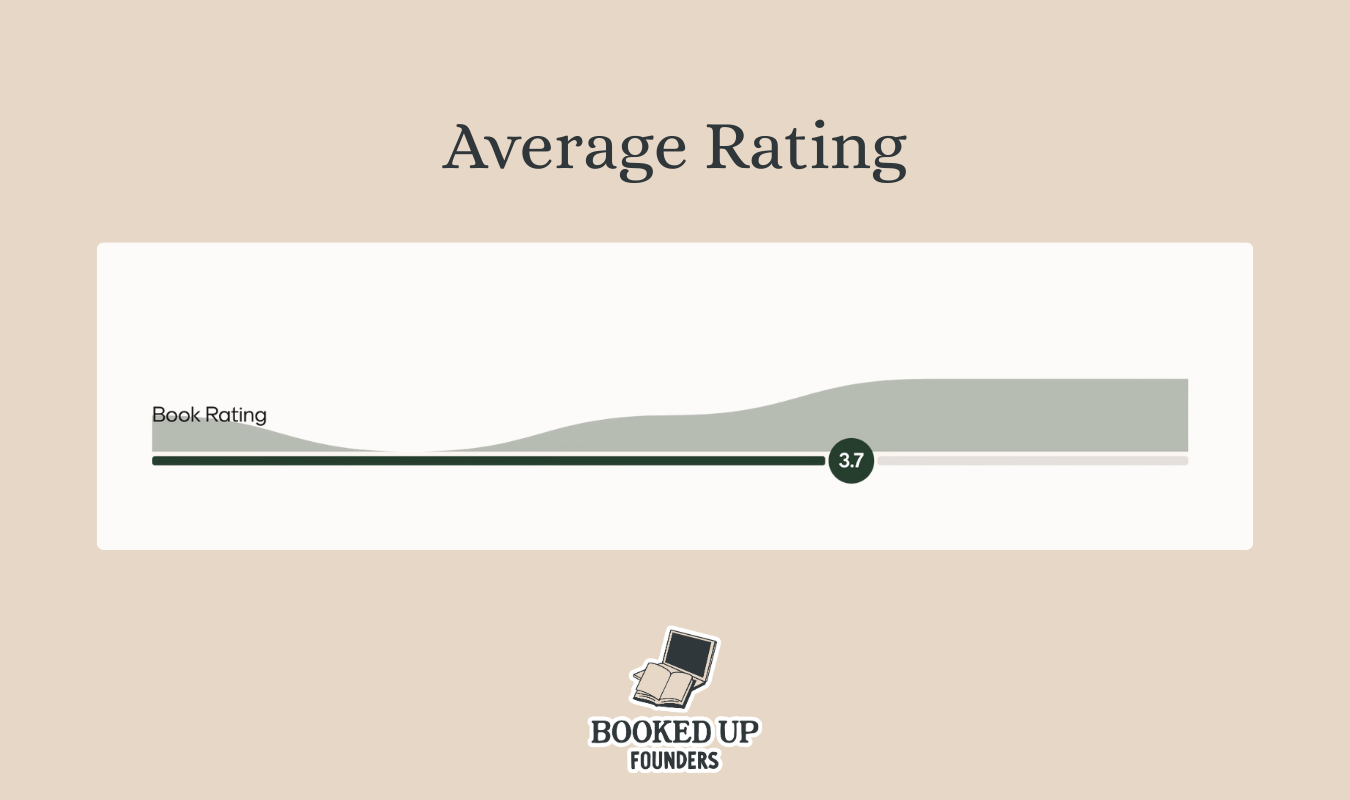
Our book club’s 3.7 rating reflects an interesting split: some members found themselves transported by the deliberate pacing and rich world-building, while others struggled with the slow burn. Berlyn Komar, founder of Planted Marketing, read ten books in December and admitted this one was the hardest to get through—though our discussion revealed layers she hadn't initially appreciated.
One Word to Describe
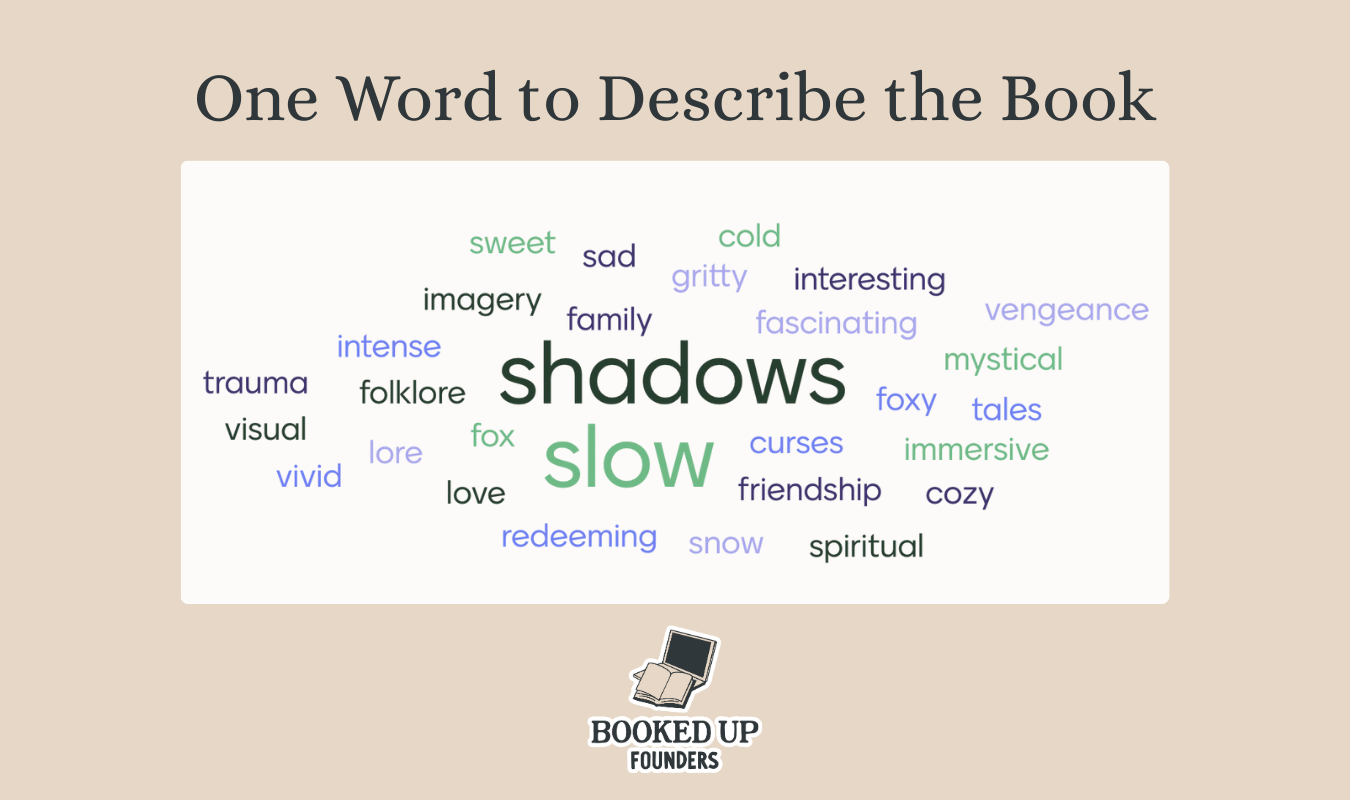
The prominence of "shadows" and "slow" captures something essential. Shadows became our central mystery, while "slow" wasn't necessarily criticism. In fact, several members found the pacing meditative rather than meandering.
Fox Spirits: Tricksters or Helpers? (Yes.)
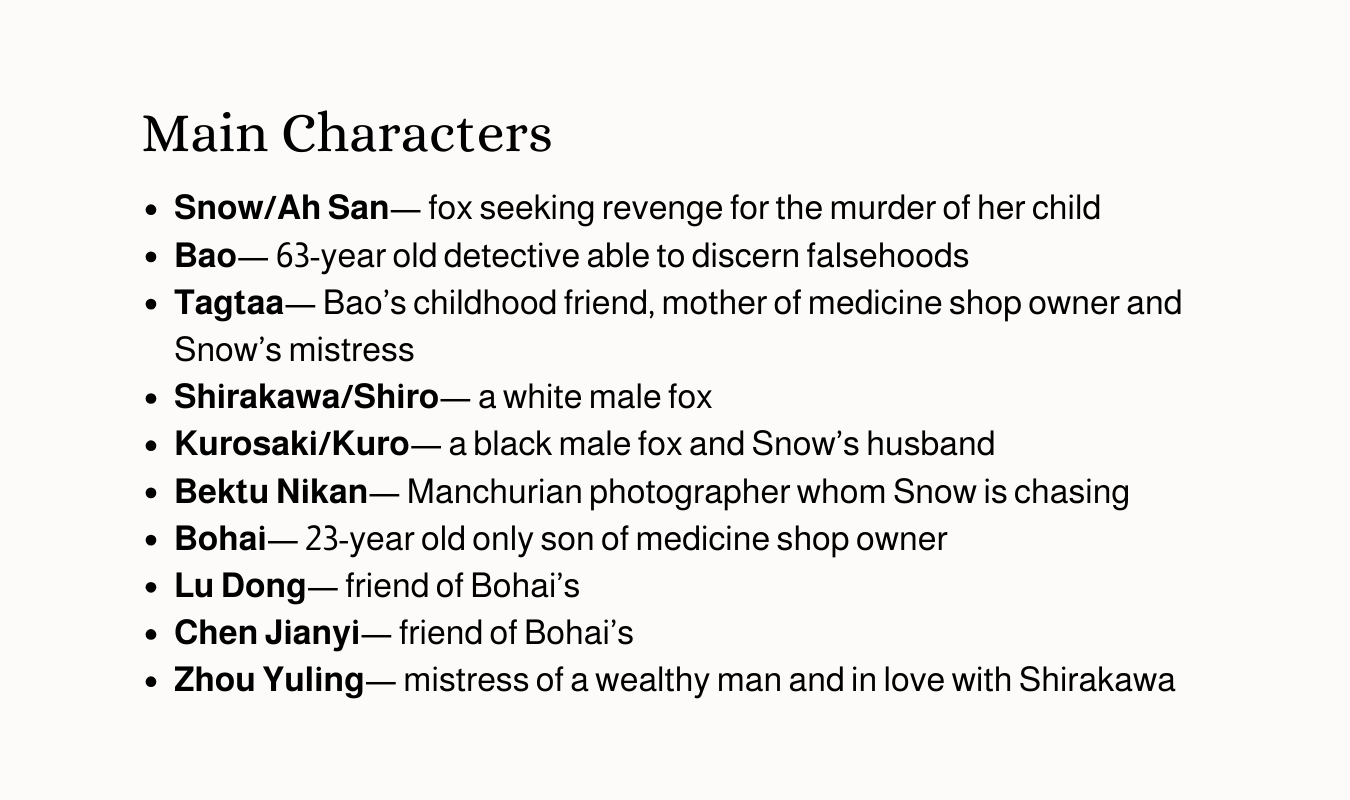
For Jacquelyn Van Sant, of Waymarks Web Studio, who spent several years in Okinawa, Japan, the fox spirit folklore felt like coming home. She explained that in Japanese, Korean, and Chinese fairy tales, foxes are clever nature spirits who could be either helpful or tricksters and you never quite knew which. This dynamic played out beautifully in the contrast between Snow's complicated mix of vengeance and compassion, Kuro's altruism, and Shiro's complete selfishness.
Bao and Tagtaaa: We Would Die for This Friendship
If there was one unanimous opinion, it was this: Bao and Tagtaa's relationship had to have a happy ending. When the realization hit that Tagtaa was Bao's childhood friend—the girl he'd been separated from decades earlier—the emotional stakes skyrocketed.
Sarah Still, of Vivid Impact Partners, captured it perfectly: "They each had so much trauma in relation to being separated from each other. And then they go, what, 50, 60 years... without each other but still wanting each other?"
Tagtaa emerged as many members' favorite character. Despite being a concubine's daughter in a deeply patriarchal society, she maintained her dignity and used whatever power she had for good—protecting Snow, raising her stepson with kindness, and shaping Bao into someone who treated women with respect.
As Briggiette Vasquez of BVA Copywriting noted, Bao's narration provided essential balance because of Tagtaa's influence on his character. When the grandson questioned why Bao was holding Tagtaa's hand, Briggiette's reaction was immediate: "Boy, if you don't back up and get out of this room."
The Pacing Debate (Spoiler: Some of Us Loved It)
While "slow" dominated our word cloud, several members came to appreciate the deliberate pacing. Sarah, who typically reads very quickly, found herself grateful. She said, "I liked having something that forced me to slow down and really become more immersed in it."
The pacing also served the mystery. Jacquelyn pointed out that with so many secondary characters, the slower pace prevented those threads from getting lost.
Copywriter Hazel Jones, praised Choo's imagery: "I really liked the author's imagery in the book. I felt like she did a really good job with the place setting." For a story set in early 1900s Manchuria during winter, the vivid descriptions helped us see the frozen landscapes and feel the cold.
(For those of us who live in perpetually sunny Southern California, the immersive winter setting was particularly welcome.)
Wait, So What's the Deal with the Shadows?
The curse on the medicine shop family and the shadow people sparked our most spirited debate. Rachel Kowalski, of The Creative Lawyers, voiced what many of us wondered: "I didn't really understand the importance of the shadow people. It came in so late...what was the significance through the whole book of a lot of people lacking shadows?"
Jacquelyn offered a theory: the curse might be a self-fulfilling prophecy rather than actual magic. Unlike the real supernatural elements (the fox spirits), the family curse could simply be "pure human superstition trying to blame spirits for what was going on, when really it was just family dynamics. There was a messed up family and they just kept perpetuating their trauma onto each generation."
Sarah pointed to the scene with Bao losing his shadow near the end: we all knew this sweet old man wouldn't harm anyone, yet the son was terrified based on superstition alone.
Jacquelyn also suggested shadows might connect to ghosts or dying people and Sarah remembered early mentions of people without shadows being ghosts. The detective's declining health throughout the book supported this interpretation.
The Baby Fox Scene Basically Destroyed Us
Multiple members became emotional discussing the death of Snow and Kuro's daughter.
Briggiette captured the rawness: "My mom heart. I was tearing up. I was like, this can't be real. Please tell me she digs her back up and she's like, hey, Mom, I'm alive."
What made it more painful was that Kuro was away hunting when it happened, leaving Snow completely alone. This grief became the wedge that drove them apart for years.
A member reflected on how authentic this felt: "I know some people who have unfortunately experienced the loss of a child... sometimes the pain can turn to blame and some couples are able to overcome it and some can't."
The fact that these were fictional fox spirits didn't diminish the reality of their grief.
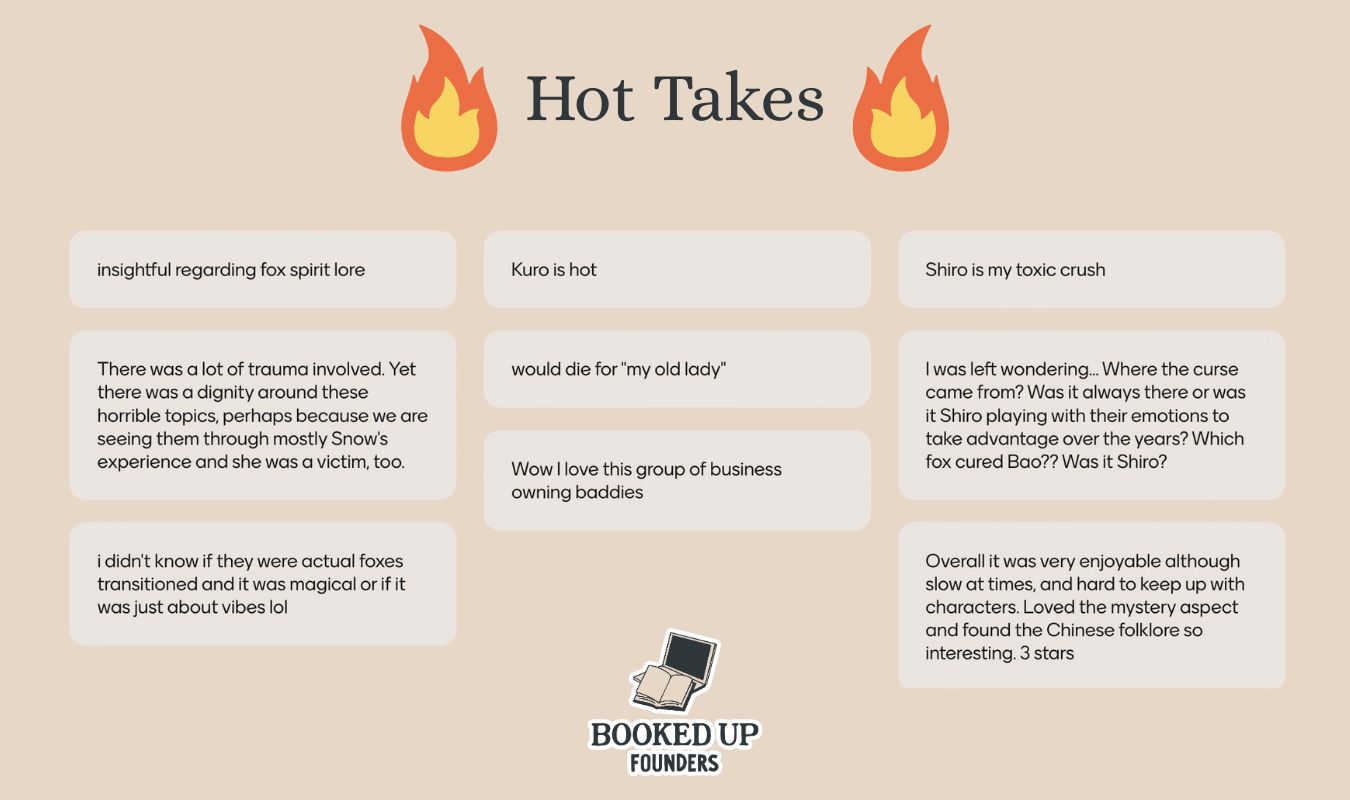
The Anonymous Hot Takes Were *Chef's Kiss*
The anonymous hot takes gave us some of the meeting's best moments:
"Kuro is hot" and "Shiro is my toxic crush" – Look, we're not here to judge your fictional fox preferences.
"Would die for 'my old lady'" – The Tagtaa energy was strong with this group.
"There was a lot of trauma involved. Yet there was a dignity around these horrible topics, perhaps because we are seeing them through mostly Snow's experience and she was a victim, too." – This perfectly captured how Choo handled violence against women throughout the book. Rachel noted the book's relative lightness compared to other historical fiction: "I appreciated the fact when they just touched on, I don't know, people being killed or things like that. It didn't get into the gory details." Sarah described feeling perpetually on edge but appreciated that the author never crossed into gratuitous territory.
"Overall it was very enjoyable although slow at times, and hard to keep up with characters. Loved the mystery aspect and found the Chinese folklore so interesting." – A fair summary that many of us echoed.
"Wow I love this group of business owning baddies" – Ditto.
The Founder Takeaway
This book reminded us why we prioritized fiction in the first place. The fox spirits' journey toward enlightenment through virtuous living felt resonant. A member declared: "You can always be a better human, no matter how good you are."
Several members acknowledged they wouldn't have picked up this book on their own. The magical realism, unfamiliar folklore, and slow pacing pushed us outside our comfort zones. But that discomfort led to one of our richest discussions yet.
As entrepreneurs, we're conditioned to optimize everything, to read with purpose. The Fox Wife asked us to simply be present with a story—to sit with ambiguity, to appreciate beautiful imagery, to feel grief and reconciliation. Sometimes that's the most valuable thing fiction can offer.
Looking Ahead
Next month we're embracing Fresh Start as our theme, right on time for January.
Want to join our fun, stress-free , fiction-only online club for business owners? Apply here.
From your mystical, fox-spirit-loving Booked Up Founders co-founders,
