
Natalie Tan's Book of Luck and Fortune by Roselle Lim: A Book Club Review
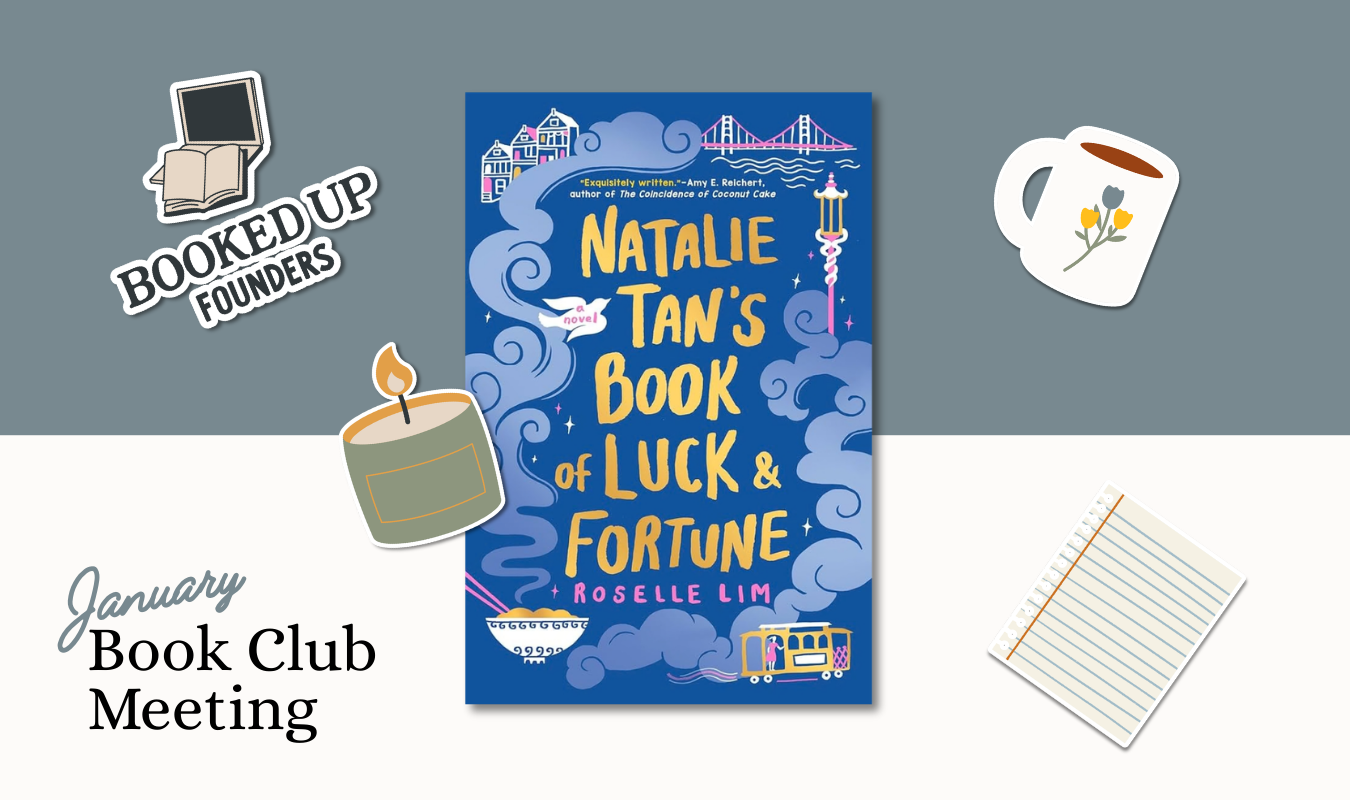
January felt like the right time to crack open a book about starting over. Natalie Tan's Book of Luck and Fortune by Roselle Lim follows a young woman who returns to San Francisco's Chinatown after years away to reopen her late grandmother's restaurant, navigate a complicated inheritance of grief, and somehow save her community from a real estate developer with very bad vibes.
Fresh start energy? On paper, absolutely. In execution? Well…let’s dig in.
About the Author
Roselle Lim was born in the Philippines and immigrated to Canada at age 10, settling in North Scarborough, a diverse and predominantly Asian neighborhood. She is half Filipino and half Chinese, and much of her writing draws from growing up in a household where, as she has described it, Chinese superstition mingled with Filipino Catholicism.
Lim’s uncles would tease her father for having two daughters, operating under the belief that daughters were obligations and sons were the ones who brought honor. Lim was told not to say her dreams out loud, because even the women in her life would shut them down.
Natalie Tan's Book of Luck and Fortune was her debut novel, published in 2019, and she has since written four more books in similar formats. A TV adaptation is currently in development, and her first YA novel is coming later this year.
Heather Petrucci, Booked Up Founders co-founder and the genius brain behind Heather Writes Copy, noted that reading Lim's background did soften her toward the book a little. As she put it, this was a writer who had been conditioned to believe her voice was worthless, and whose first novel was her declaration that it no longer was. That context matters.
The Group Rating
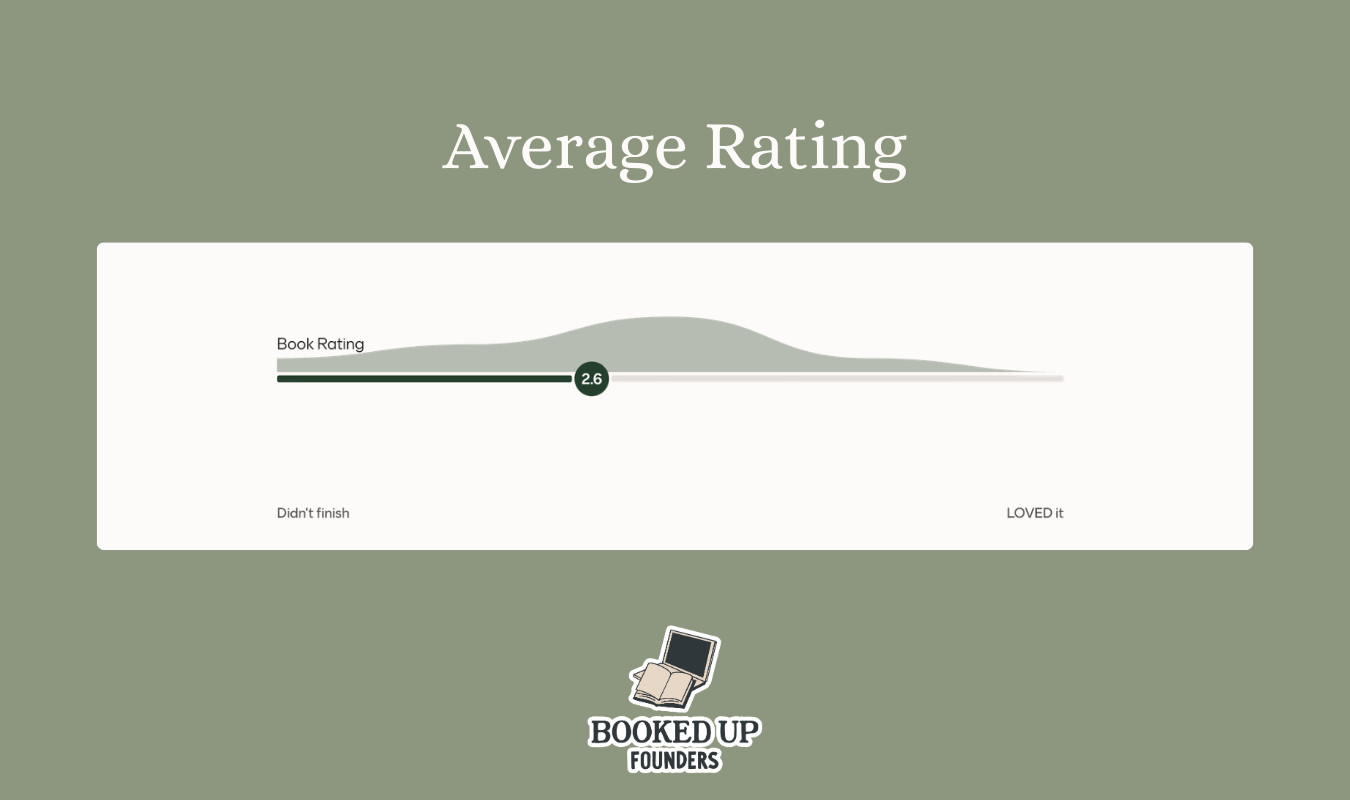
A 2.6. Our lowest group rating yet, and to be fair, probably not a huge surprise given what you're about to read. That said, the conversation was rich, the opinions were varied, and at least one member powered through the entire book in a single sitting and genuinely enjoyed it.
Because our group is the best, a low average didn’t make a boring meeting.

The Word Cloud
"Ghost dad" and "dumpling" and "gentrification" all fighting for dominance in the word cloud is honestly the most accurate possible summary of this book's identity crisis. Also: "like porn watching him eat" made it in, and we are not elaborating further. You'll understand when you get to the romance section.
What Worked in Natalie Tan’s Book of Luck & Fortune
The Food Descriptions
Say what you will about the pacing or the romance, but this book made people eat. Two of our members went out to get dumplings immediately after finishing the book. The food writing was genuinely evocative, and Roselle Lim's recipes, which she shares on her own website alongside recent meals she's cooked, became an unexpected highlight.
Though she didn’t love the book, Rachel Kowalski of Creative Lawyers noted that she would give the TV show a chance, and maybe some of the recipes.
The Chinatown Setting
The sense of place in this book was real enough to inspire at least one virtual field trip. Heather, who has never fully explored San Francisco, went on Google Earth and “walked” Chinatown from the gate Lim describes, just to see it.
Jeannie Hardy, founder of a gorgeous lavender farm nestled in the San Diego mountains, said it made her want to go back to the city and look for the little secret alleyways and gardens she now knows are there.
For members who have visited, the neighborhood felt lived-in and specific. For those who haven't, it made them want to go.
One Member’s Case for the Cozy Read
Not everyone came into the meeting skeptical. Jeannie told us she read the book right after Christmas, once the house had quieted down, and finished it in about twelve hours. She described it as "very Hallmark-esque," which for her, in that particular moment, was exactly what she needed.
She wasn't picking apart details. She was just sitting with a book for a whole day, and that felt good. This is something we come back to in the book club again and again: the same book can land completely differently depending on when and how you come to it.
Multi-passionate founder Maggie Arai echoed this directly. Having just come off The Fox Wife and another book by the same author, she felt like she was poorly primed for this one. She remarked, “It's really interesting how the same book can hit you differently at different times."
The Gentrification Of It All
Amid all the criticism, one theme landed with genuine weight: the gentrification storyline. Booked Up Co-Founder and brand strategist Allie Gibson observed that the book did a good job showing the trickle-down effects of what happens when someone enters a neighborhood with deep cultural history and offers residents enough money that it's hard to say no.
Many of our members agreed this thread should have been the core of the book, and that a more focused version of this story, with the real estate conflict and Natalie's reckoning with her grandmother's legacy at the center, could have been something special.
The Anonymous Hot Takes Were *Chef's Kiss*
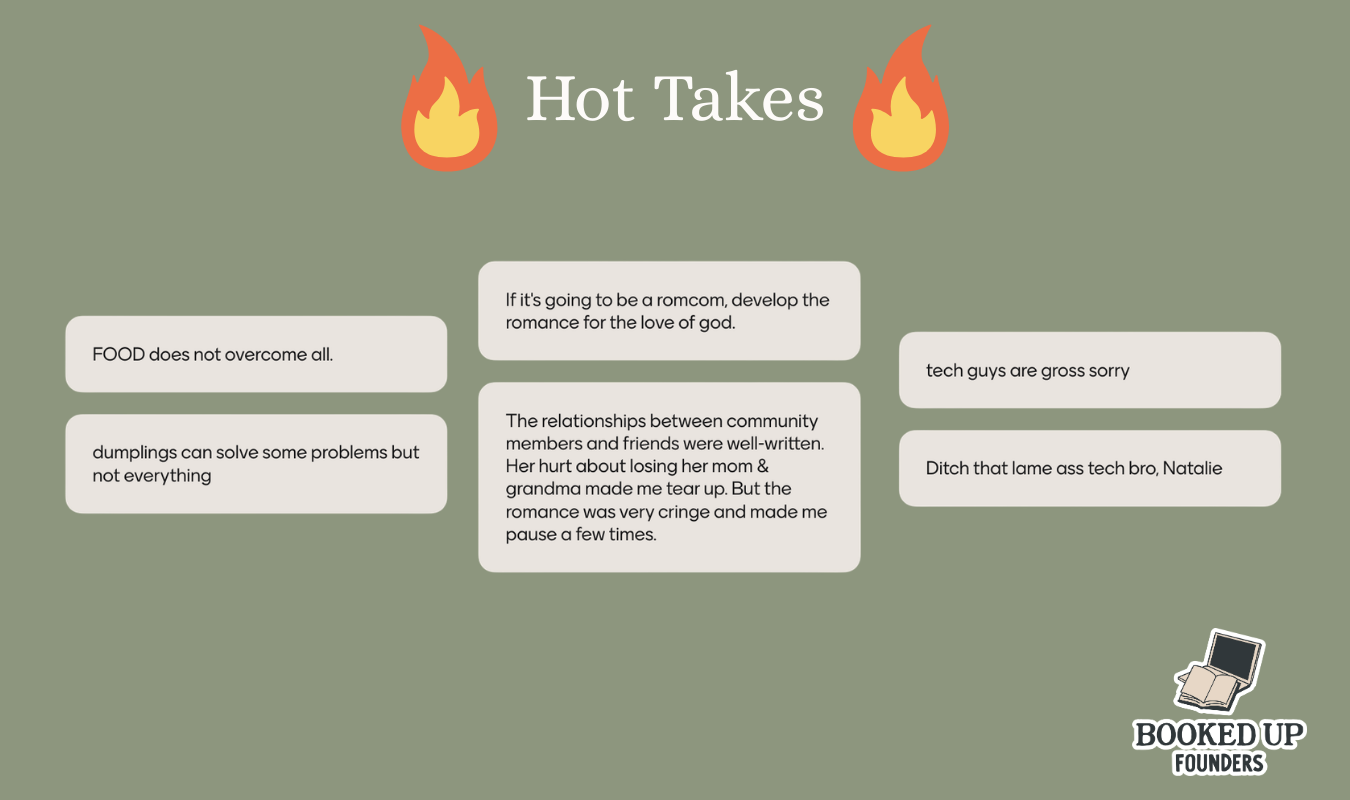
Every month, members get to submit one truly anonymous, no-holds-barred hot take.
January's were chaotic and perfect:
"If it's going to be a romcom, develop the romance for the love of god."
"FOOD does not overcome all."
"tech guys are gross sorry"
"dumplings can solve some problems but not everything"
"The relationships between community members and friends were well-written. Her hurt about losing her mom & grandma made me tear up. But the romance was very cringe and made me pause a few times."
"Ditch that lame ass tech bro, Natalie"
The range. The specificity. The solidarity. We love this group.
The Things That Didn’t Land With Us
The Romance
The main consensus: the romance subplot was the weakest element of the book, and almost everyone felt it. The love interest, a tech guy who always has an earbud in his ear, arrives, eats some food, and leaves. He comes back. Heart racing. A leather bag he carries is described as "familiar," despite the characters having met exactly once.
Heather noted that "she watched him eat one spring roll, and her legs were just shaking." Their date involves counting boats in the marina, which Allie compared to something you would do with a toddler.
Copywriter Hazel Jones put it plainly: "I think the romance could have been completely cut out and it would have made the story better."
Several members agreed. The anonymous hot takes agreed. Even the word cloud agreed, with "tech bro" making a cameo.
A member summed it up: "[The Author] was not selling tech bros for me."
The Magic System
The magical realism in this book left a few members unsure of the rules. It took Heather a while to realize the food was actually, literally magical, rather than just exceptionally good. The tear-collecting moment felt significant in the moment but never paid off.
And Ghost Dad, our beloved, felt like it appeared and then simply dissipated into the mist, which is, in fact, exactly what he did.
Rachel felt the story would have been richer if the father had been a real, present person rather than a ghost. It would have demanded more from both the plot and the characters. The ghost felt like a shortcut.
Too Much Packed In to Too Little
The author of the book described this story as an exploration of grief, community, gentrification, cultural heritage, and food as a magical healing force, and all of those elements are technically present, but none of them are given real weight.
They all exist at the same volume, which means none of them fully land. Heather's note: "Pick a lane." She would have been happy with any of them as the focus, including the romance, if it had been developed..
The Founder Takeaway
We spent some time discussing this line:
"We Chinese wore our guilt like jade pressed against our skin, displayed with pride and always inherited."
It's a beautiful line, and it opened up a conversation about inherited patterns in business. It raised the idea of how the women who fought hardest to get where they are sometimes make it harder for the women who come after them, because they were made to struggle for it and believe everyone should.
We discussed the instinct to gatekeep earned success, to say "you didn't suffer enough to deserve this." Not because people are inherently cruel, but because the struggle was so woven into their identity that they don't know how to hand something over without the weight attached.
If you’re a founder or a team leader, spend some time with these questions:
What are you inheriting that you didn't choose?
What patterns are you passing on without meaning to?
Natalie's mom spent years keeping a secret that caused her daughter decades of pain, operating out of her own grief and shame.
Sometimes the most generous thing we can do, for our teams, our communities, our families, is to just say the thing plainly and let people start fresh.
Up Next: James by Percival Everett
February is Black History Month, and we are reading James by Percival Everett. It's a retelling of Adventures of Huckleberry Finn told from the perspective of Jim, and several members who've read it already are describing it as unforgettable.
See you next month, Founders.
Want to join our fun, stress-free , fiction-only online club for business owners? Apply here.
From your dumpling-loving Booked Up Founders co-founders,
Heather and Allie
